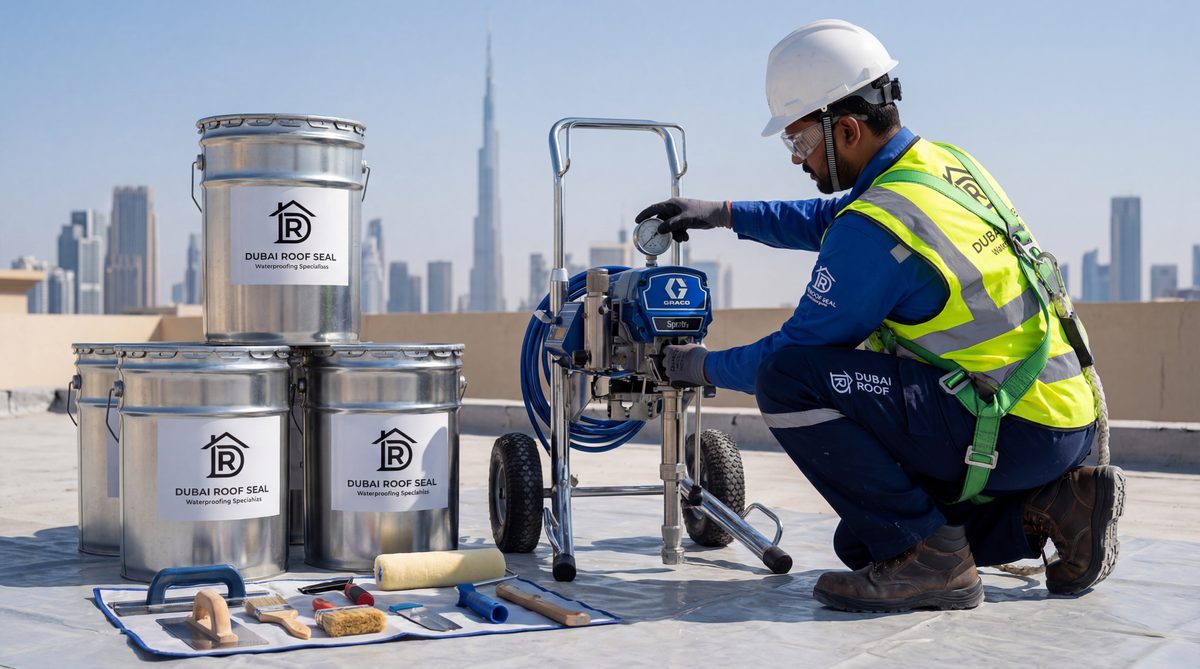
As the premier authority on commercial roofing in the United Arab Emirates, Dubai Roof Seal is frequently called upon to fix disastrous waterproofing failures caused by poor material selection or improper application techniques. To elevate the standards of the industry and educate facility managers, our technical experts have compiled the Ultimate Guide to Metal Roof Waterproofing Best Practices for the UAE Climate.
This guide dives deep into the material science, installation methodologies, and preventative maintenance strategies required to maintain a secure, leak-free industrial roof in one of the world's most extreme environments.
1. The UAE Climate Impact on Metal Substrates
Before selecting a waterproofing system, one must understand the unique physical forces at play on a UAE metal roof:
- Extreme Thermal Shock: A corrugated metal roof in Dubai can reach surface temperatures of 75°C (167°F) during a summer day, before cooling rapidly to 30°C at night. This massive daily delta causes extreme thermal expansion and contraction. Standard rigid sealants will snap under this kinetic stress within weeks.
- Coastal Salinity & High Humidity: The coastal proximity of industrial hubs like Jebel Ali means the air is laden with salt and moisture. This creates a highly corrosive environment that attacks exposed metal panels and fasteners aggressively, causing rapid oxidation (rust).
- UV Degradation: The intense UV index in the UAE chemically breaks down cheap acrylics and bitumens, causing them to chalk, crack, and eventually flake away, exposing the substrate.
2. Material Selection Science
Applying the wrong chemical compound to a metal roof guarantees failure. Here is the hierarchy of waterproofing materials based on their molecular suitability for the UAE:
Liquid Applied Polyurethane (The Industry Standard)
Polyurethane forms an incredibly tough, seamless elastomeric membrane. Its key advantage is its elongation capacity—it can stretch over 400% without tearing, allowing it to move with the metal substrate during thermal expansion.
Synthetic EPDM Liquid Rubber (The Premium Choice)
While historically available only in rolled sheets, liquid-applied EPDM represents the cutting edge of waterproofing technology. It offers unparalleled UV and ozone resistance and remains flexible indefinitely.
Why Cheap Acrylics Fail
Water-based acrylic coatings (often sold as "white roof paint") are popular because they are cheap and easy to apply. However, they lack the tensile strength to bridge expanding metal seams and will re-emulsify (turn back to liquid) if exposed to standing water for more than 48 hours.
3. Installation Best Practices & Techniques
Even the most advanced chemical membrane will fail if the substrate preparation is inadequate. Dubai Roof Seal adheres strictly to the following installation methodology:
Phase A: Aggressive Substrate Preparation
The substrate must be surgically clean. This involves 3000+ PSI pressure washing to remove dirt, efflorescence, and flaking factory coatings. More importantly, any existing oxidation must be treated with a chemical rust converter to neutralize the iron oxide, followed by an industrial anti-corrosive primer.
Phase B: Fastener and Seam Detailing (The Critical Step)
90% of metal roof leaks occur at the seams or fasteners. Best practice dictates that every single screw must be inspected. Backed-out screws must be replaced with oversized fasteners equipped with fresh neoprene washers. Once secure, every overlapping seam and fastener must be encapsulated using a reinforced polyurethane mastic, often embedded with a polyester geotextile fabric mesh for structural reinforcement.
Phase C: Seamless Encapsulation
The primary liquid membrane should be applied in multiple thin coats rather than one thick coat, allowing proper curing and outgassing between layers. This ensures a monolithic, pinhole-free barrier across the entire roof plane.
4. Preventative Maintenance Schedules
A high-performance waterproofing system is an investment that requires minimal, yet essential, maintenance to uphold the warranty and maximize its lifespan:
- Bi-Annual Inspections: Conducted before the summer heat (April) and before the winter rains (October).
- Debris Clearing: Sand, dust, and industrial fallout must be cleared from gutters and drainage points to prevent ponding water.
- HVAC Technician Monitoring: The most common cause of premature membrane failure is mechanical damage caused by AC technicians dragging heavy toolboxes across the roof or spilling chemical refrigerants. Implement strict access protocols for your roof.
Conclusion: The Cost-Benefit of Doing It Right
Opting for a cheap, temporary patch job on an industrial metal roof is a false economy. The disruption to operations, potential inventory loss, and inevitable rework will quickly exceed the initial cost of a professional, scientifically applied elastomeric system.
Further Reading
Need an Expert Audit of Your Facility?
Our technical team provides comprehensive, no-obligation roof condition reports for commercial and industrial facilities across the UAE.
Request an Expert Site Audit